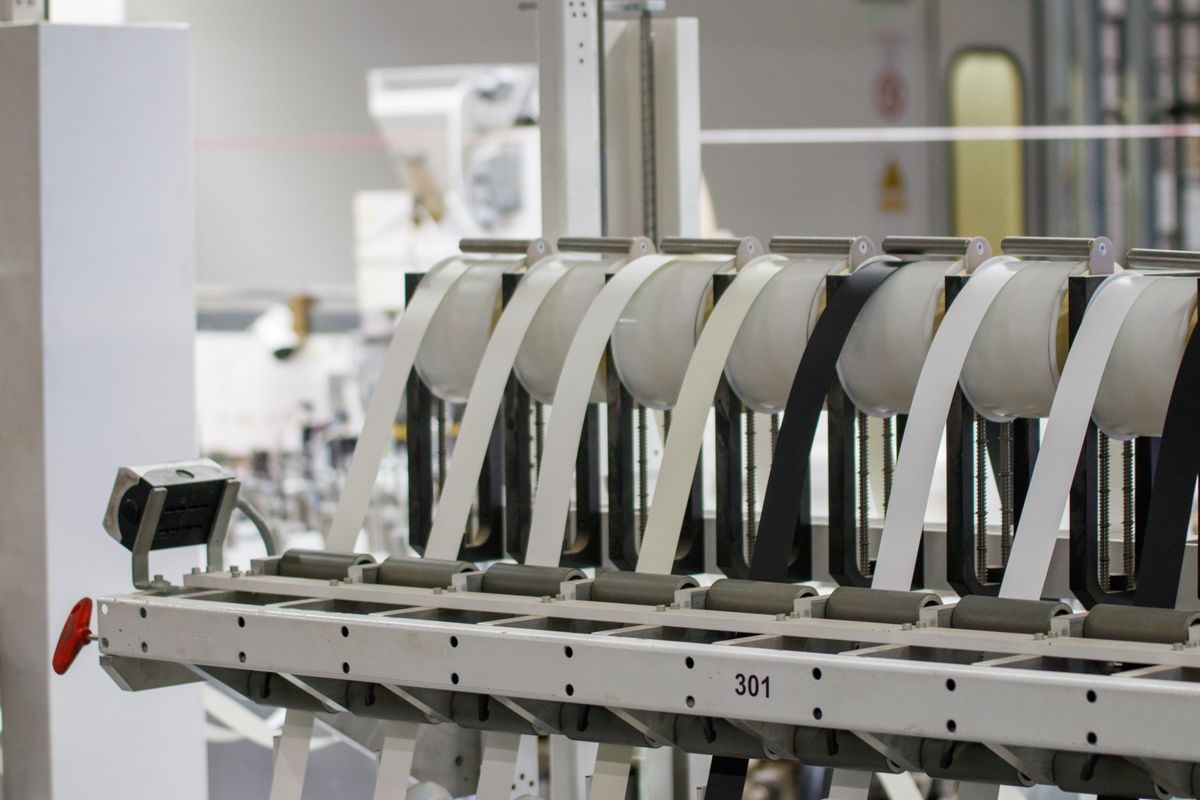
Manufacturing websites are usually designed for the wrong reader. They open with a corporate mission statement, a photograph of the facility, and a paragraph about a commitment to quality — written as though the visitor is a customer browsing. The actual visitor is a design engineer or a procurement specialist checking, in about ninety seconds, whether you can make the part they need to the tolerance they need in the quantity they need. Everything else is noise.
Who Is Actually Visiting
Three distinct people, with different needs:
The design engineer is specifying a part, often early in a project. They want capabilities, materials, tolerances, and CAD files. They will disqualify you in seconds if the technical detail is not there.
The procurement specialist is sourcing suppliers against a requirement. They want certifications, capacity, lead times, quality systems, and evidence you can handle their volume.
The executive appears late and wants to know you are a stable, credible business.
Most manufacturing sites are written for the third and ignore the first two — who are the ones who actually shortlist you.
Lead With Capabilities, Not Company History
The homepage should answer “what can you make” immediately.
Structure capabilities as individual pages, not a bulleted list. CNC machining, injection moulding, sheet metal fabrication, welding, assembly — each needs its own substantive page covering:
- Processes and equipment, with actual machine list and sizes
- Materials worked, specifically
- Tolerances achievable, with real numbers
- Part size envelope — maximum and minimum dimensions
- Volume range — prototype, low volume, high volume
- Typical lead times
- Industries served
The numbers are what matter. “Precision machining to tight tolerances” tells an engineer nothing. “±0.0005 in on turned parts up to 12 in diameter” tells them whether to keep reading. Vagueness in this sector reads as inexperience.
Publish your equipment list. Machine makes, models, capacities, and count. Engineers genuinely read these, and it is the fastest way to establish you can do the work.
Certifications Are a Filter, Not a Badge
For many procurement processes, certification is a hard gate. ISO 9001, AS9100 for aerospace, IATF 16949 for automotive, ISO 13485 for medical devices, ITAR registration where relevant.
Put them somewhere obvious and state the scope and expiry. A supplier without the required certification is not evaluated at all, so hiding this on an about page costs you enquiries you never learn about.
Technical Documents and the SEO Problem
Manufacturing sites lean heavily on PDFs — spec sheets, material data, capability statements, CAD files. That creates a real search problem.
PDFs index poorly. Google can read them but ranks them worse than HTML, they cannot be marked up with schema, they are bad on mobile, and users have to download to evaluate.
The fix: publish the substance as HTML pages and offer the PDF as a download alongside. A material specification as a web page with a table ranks; the same content as a PDF largely does not.
For CAD files, gating behind a form is standard and generally accepted in this sector — engineers expect it and the lead quality is high. But do not gate the specifications themselves. Gate the file, publish the data.
The RFQ Path
The request for quote is the conversion event, and most manufacturing sites make it unnecessarily hard.
Make the RFQ button visible on every page. An engineer who has just confirmed you can make their part should not have to navigate.
Allow file uploads — drawings, CAD files, specifications. An RFQ without a drawing usually means a follow-up email and a delay.
Ask what you actually need: part description, material, quantity, tolerance requirements, target timeline, and any certification requirements. Skip anything you will not use to quote.
Set a response expectation. “Quotes returned within two business days” is a differentiator in a sector where slow response is normal.
Offer a direct engineering contact. Many technical buyers would rather email a named engineer than fill in a form.
Content That Brings Technical Buyers
Manufacturing has genuine long-tail search opportunity because the queries are specific and the competition is thin:
- Material comparisons — “6061 vs 7075 aluminium,” “PEEK vs Delrin for [application]”
- Process selection — “when to use injection moulding vs CNC machining”
- Design for manufacturability guidance — draft angles, wall thickness, tolerance stack-up
- Industry-specific application pages — what you make for aerospace, medical, automotive
- Cost drivers — what actually makes a part expensive to machine
This content works because engineers genuinely search it during design, which is exactly when supplier decisions get made. It is also the kind of content that earns links, because it is useful reference material rather than marketing.
Write it properly or not at all. Technical audiences detect superficial content immediately, and a wrong tolerance figure destroys credibility permanently.
Structure and Navigation
A structure that holds up:
- Capabilities — one page per process
- Materials — one page per material family
- Industries served — one page per vertical
- Quality and certifications
- Equipment list
- Resources — technical guides, downloads
- About, facility, careers
- RFQ, reachable from everywhere
Cross-link heavily. An engineer reading about a material should reach the processes that work it and the industries that use it.
Careers deserves real attention. Skilled manufacturing labour is scarce, and the careers page is frequently among the most visited on these sites. Treat it as a real page, not an afterthought.
Speed and Technical Foundations
Manufacturing sites are often old, slow, and built on outdated platforms. That matters less for conversion here than in consumer categories, but it matters for search — see Core Web Vitals and our technical SEO basics guide.
One specific issue: large product or part catalogues generate significant crawl waste through filters and pagination. Handle it deliberately — see pagination SEO and our robots.txt guide.
Rough Budget
- Template build with capability pages: $5,000–12,000
- Custom design with RFQ system and technical content: $12,000–40,000
- Large manufacturer with part catalogues and CAD integration: $40,000+
Technical content written by someone who understands manufacturing is a separate and significant cost — typically $300–800 per page — and it is where the return is. Our guide to how much a website costs covers the general drivers.
Write for the Engineer
The single most useful change most manufacturing sites could make is replacing marketing language with specifications. An engineer evaluating suppliers is running a filter, and every vague claim is a missing data point that pushes them toward a competitor who published the number.
Publish the tolerances. Publish the equipment list. Publish the materials and the size envelope and the certifications with their scope. It feels like giving away information; it is actually the qualification process doing itself, which is what a B2B website should be for.
The same specificity drives rankings — our guide to SEO for manufacturers covers targeting the low-volume, high-value keywords technical buyers actually use.
If you want a manufacturing website structured around capabilities and RFQ conversion rather than corporate messaging, our web design services cover design, build and technical content. Get in touch with the team at blogthememachine.com, and subscribe to our newsletter below for more guides.