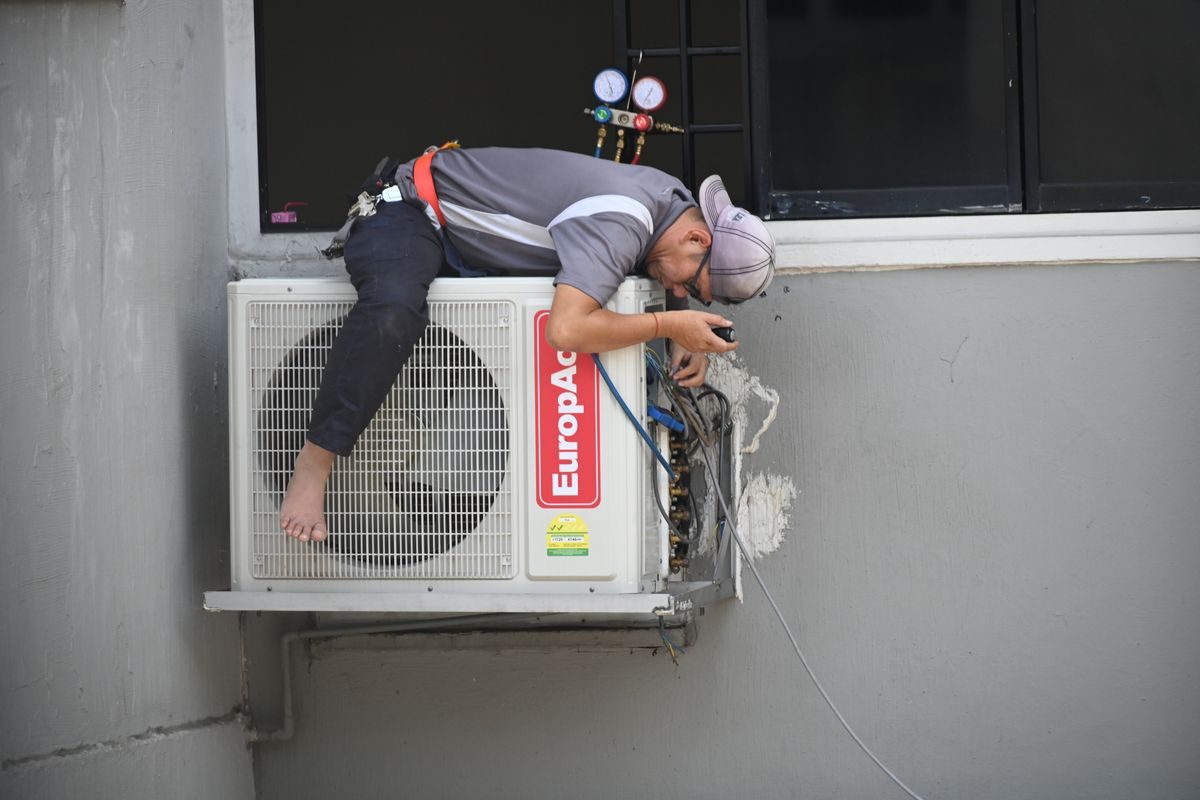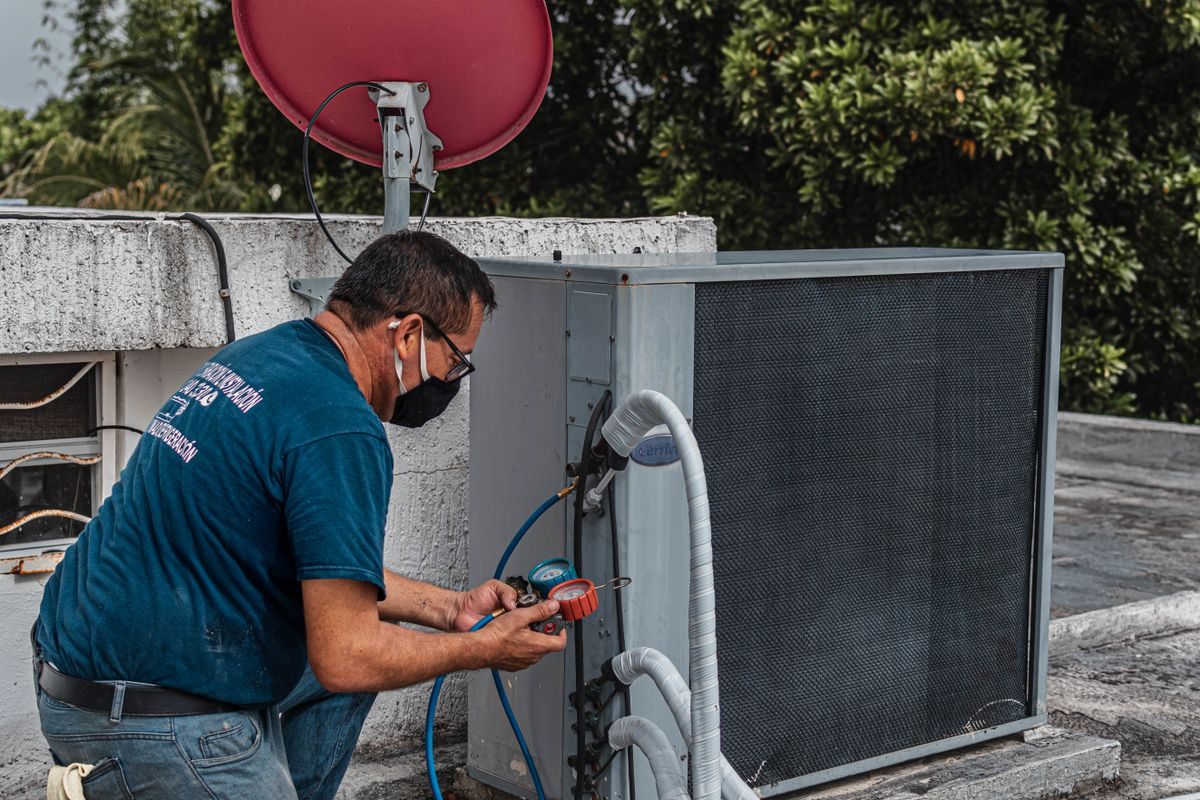
HVAC has a customer behaviour pattern that should dictate everything about the website and almost never does. The air conditioning fails on the hottest day of the year. Someone searches on their phone, in an uncomfortable house, and calls the first company that looks competent and appears to be able to come today. They are not comparing quotes, reading your about page, or evaluating your brand. They are trying to stop being hot. A site built for that person looks very different from a typical contractor brochure site.
Design for the Emergency
Phone number in the header, tappable, on every page, above the fold. This is the single highest-impact element on an HVAC site. Not in the footer. Not on the contact page. Visible without scrolling on a phone.
State your availability explicitly. “24/7 emergency service” or “Same-day service available” near the top answers the only question that matters in the moment. If you genuinely do offer emergency call-outs, that is your primary differentiator during peak season.
Show your service area immediately. A customer needs to know you cover their town before anything else matters. A list of towns or a simple map near the top prevents wasted calls in both directions.
Keep emergency paths short. From landing to phone call should be one tap. Every additional step during an emergency loses customers to whoever is faster.
The site should still serve the planned-purchase visitor researching a system replacement — but the emergency visitor is more urgent, more common during peak, and far more sensitive to friction.
Handling Seasonality
HVAC demand swings violently. Cooling searches spike in summer, heating in winter, and the shoulder seasons are slow. Most HVAC sites are built for one and neglect the other.
Practical responses:
- Separate service pages for heating and cooling, each substantial enough to rank on its own. Do not combine them into one “HVAC Services” page.
- Rotate homepage emphasis seasonally — AC repair prominent in spring, furnace and boiler service in autumn.
- Build maintenance plan content for the shoulder seasons. Recurring maintenance contracts are the most valuable thing an HVAC company can sell, and spring and autumn are when people will consider them.
- Publish pre-season content early. “Should I replace my AC before summer” should be live and indexed in March, not June. Content takes months to rank, so seasonal publishing has to run ahead of demand.
Maintenance plans deserve particular attention. They smooth revenue, they lock in customers, and they are the thing most HVAC sites bury. Give them a dedicated page with clear pricing and a signup path.
Service Area Pages, Done Properly
Most HVAC companies serve twenty or more towns and want to rank in each. The temptation is to generate twenty pages from a template with the town name swapped.
That is a doorway page pattern and Google treats it as spam. It also does not work — those pages rarely rank and can drag down the site.
What works instead:
- Genuinely distinct content per location — local landmarks, the housing stock in that area, typical system types, local climate considerations, actual jobs you have completed there
- Real photos from work in that area where possible
- Local reviews from customers in that town
- Fewer, better pages. Five substantial location pages beat twenty thin ones.
If you cannot write something genuinely specific about a town, do not make a page for it. Cover it in a service area list instead.
What Builds Trust Fast
HVAC customers are letting a stranger into their home and spending anywhere from $150 to $15,000. Trust signals matter and most are cheap to add:
- Licence and insurance numbers, displayed plainly
- Technician photographs — knowing who is arriving matters
- Reviews prominently, with the count and average visible
- Manufacturer certifications — Carrier, Trane, Lennox dealer status
- Years in business and service history
- Upfront pricing or diagnostic fee, stated. “Free estimates” or “$89 diagnostic” removes a real hesitation
- Financing options for replacements. A $9,000 system replacement is a financing decision for most households, and saying so early keeps people on the page
Where Organic Traffic Comes From
Beyond emergency searches, HVAC sites can rank for genuinely useful informational content:
- Cost content — “how much does a new furnace cost,” “AC replacement cost [region].” High intent, and people search it before calling anyone.
- Troubleshooting — “AC blowing warm air,” “furnace making noise.” These bring people at the exact moment they are deciding whether to call.
- Comparison content — heat pump vs furnace, repair vs replace, SEER ratings explained.
- Rebates and tax credits for efficiency upgrades, which change frequently and are genuinely searched.
Troubleshooting content is worth doing carefully. Answer the question honestly, including the cases where it is a simple fix — the credibility you earn converts better than withholding information does.
Local SEO Does Most of the Work
For HVAC, the Google Business Profile is usually the primary lead source, ahead of the website:
- Complete profile with correct primary category
- Service areas configured properly
- Photos of trucks, technicians, and completed work
- Systematic review generation — ask after every completed job
- Respond to every review
- Consistent NAP across directories
- LocalBusiness and HVACBusiness schema on the site
Our guide to local SEO for small businesses covers the fundamentals, and for HVAC they matter more than most website decisions.
Speed, Because Mobile and Impatient
An emergency visitor on cellular data will not wait. Keep the site light, compress images, and be sceptical of page builders that load megabytes of unused CSS. Our guide to Core Web Vitals covers what to measure.
Rough Budget
- Template build with service and location pages: $2,500–7,000
- Custom design with booking and CRM integration: $7,000–20,000
- Multi-location operation: $20,000+
Scheduling integrations — ServiceTitan, Housecall Pro, Jobber — are worth building in rather than retrofitting. Our guide to how much a website costs covers the general drivers.
Build for the Hottest Day of the Year
The test for an HVAC site is simple: someone whose AC just failed, on a phone, in a hot house, at 7pm. Can they confirm you cover their area, see that you offer emergency service, and reach you in one tap?
If yes, the site works. If they have to scroll, navigate, or open a contact form, they have already called someone else. Everything else on the site — the informational content, the maintenance plans, the financing pages — matters, but it matters second.
Once the site converts, the question is whether anyone finds it. SEO for HVAC contractors covers ranking through both heating and cooling seasons.
If you want an HVAC website built around emergency conversion and proper service area structure, our web design services cover design, build and integration. Get in touch with the team at blogthememachine.com, and subscribe to our newsletter below for more guides.